Let me start with two facts, because they will keep this whole conversation honest. In 2019, a woman in the Houston area who bred and showed champion Doberman Pinschers — a knowledgeable dog person, not some fool who bought a monster off the internet — was found dead at her own home with multiple dog-bite injuries, her two full-grown Dobermans present. [1] And back in 2001, in a San Francisco apartment building, a lacrosse coach named Diane Whipple was mauled to death in her own hallway by two Presa Canarios, a giant guardian breed, in a case so horrifying it put a dog owner in prison for murder. [2] A pregnant woman in California was killed by her own family pit bull in 2011. [3] These were not strangers' dogs in a dark alley. In two of the three, they were the victim's own dogs, in their own yard or home.
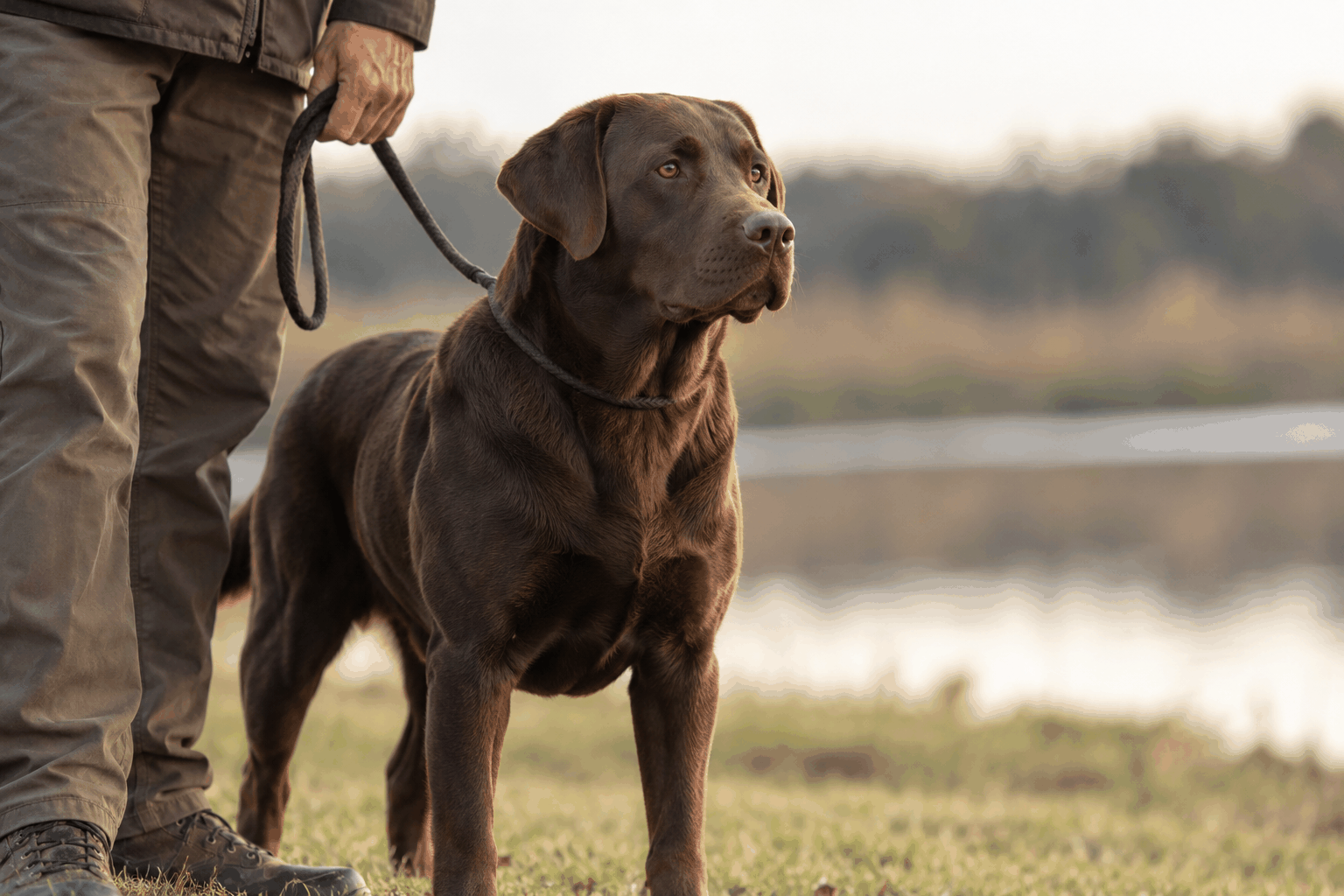
I raise and train powerful dogs for a living, and I love them, and I am about to tell you the truth that a lot of dog people will not, because it is unpleasant and it does not sell puppies: a big, powerful, high-drive dog is not a stuffed animal. It is a loaded tool. Most of them, raised and matched and managed right, go their whole lives and never hurt a soul — mine do. But when one goes wrong, the difference between a Chihuahua going wrong and a Presa going wrong is the difference between a bad afternoon and a funeral. That is not breed-bashing. That is physics.
— PROVERBS 22:3
· · ·
“Love is not blind; that is the last thing that it is. Love is bound; and the more it is bound the less it is blind.”
— G.K. CHESTERTON
Breed Is Not the Whole Story — but the Hardware Is Real
Let me be fair and precise, because the truth lives in the balance. Breed alone does not make a dog dangerous. The individual dog matters most; how it was bred for temperament matters; how it was socialized matters; and above all the owner matters — a firm, honest, competent hand versus a person who thinks love alone raises a dog. Even our own government stepped back from breed labels: the CDC stopped tracking dog-bite fatalities by breed years ago, in part because breed is a poor sole predictor and the data was unreliable. [4] I am with them that far.
But here is where the “it's all how you raise them” crowd loses me, because it is only half true and the missing half gets people killed. Raising matters enormously — and a Doberman, a Presa, a Cane Corso, a Rottweiler, a big bully breed still comes from the factory with the hardware a footstool dog does not have: the jaw, the drive, the strength, the prey and guard instincts bred into it for centuries of serious work. When ninety-nine of them are gentle as lambs, folks decide the breed is harmless. But the tally the advocacy groups keep — and I will tell you plainly they have a dog in the fight — consistently finds that a handful of powerful breeds account for the lion's share of the roughly three to five dozen Americans killed by dogs every year. [5] You can argue the breed politics all day. You cannot argue with a coroner.
Respect the hardware, or the hardware will teach you respect.
“He'd Never Hurt Anybody” — Famous Last Words
Do you know the four most dangerous words in the dog world? “He'd never do that.” I have heard it from the sweetest people alive, standing over a bitten grandchild, genuinely stunned. Here is the thing they missed: the dog had been telling them for months. The stiffening when the baby crawled near the food bowl. The hard stare. The low grumble everybody laughed off as “talking.” The snap that “didn't really connect.” Dogs almost never go from zero to tragedy. They climb a ladder of warnings, one rung at a time, and a whole lot of owners are looking at their phone the entire climb.
The Houston breeder knew Dobermans. The warnings, whatever they were, still got missed or overridden. If it can happen to an expert, put your guard up, not down.
Now the Part That Explains Why People Keep the Dog Anyway
Here is the piece that ties this to everything else I teach, and it is real biology, not a lecture. When you love a dog, your brain floods with a bonding hormone called oxytocin — the same chemical that bonds a mother to her baby, released just by the two of you gazing at each other. [6] It is a wonderful thing and it is also, when the dog has started showing teeth, a trap, because that chemical will argue with your own good judgment and win.
It is the exact same mechanism — oxytocin, the attachment chemical — that keeps a good woman hung up on a no-account man she knows in her head she ought to leave: she didn't decide to stay with the creep, her biology bonded her to him, and then her head spent two years losing an argument with a hormone. [6] It cuts every direction; men do the same. And people do it with a dangerous dog.
They have bonded. They cannot bear to see the warning signs for what they are, cannot bear to rehome or, if it comes to it, put down the animal they love — so they explain it away, one snap at a time, until the day a child or a grandmother pays the bill. The love is real. That is exactly what makes it dangerous. Love, as Chesterton said, is not blind — it is bound.
So What Does a Sane Person Actually Do?
Not panic, and not swear off good dogs — I raise big dogs and would trust the right one with my grandkids. You do this instead. Pick the dog for the home, not the look — do not buy a powerful breed because it looks tough or its puppy face melted you; buy the temperament that fits your life, which is the whole reason I match my pups rather than let folks pick the cute one.
Respect the hardware — a powerful dog needs a competent owner, real training, honest socialization, and a job, not just a couch and good intentions. Watch the ladder — learn the warning signs, and the day your dog starts climbing them, get a professional involved now, while it is still a training problem and not a tragedy.
And keep your judgment out of the hormone's reach — decide ahead of time, in the cold light of day, what behavior you will not tolerate around your children, and hold that line even when your heart is screaming to give the dog one more chance. Especially then. The families in those news stories all loved their dogs too.
I am not writing this to run down anybody's breed — I have known angel Dobermans, gentleman Rottweilers, and bully-breed dogs I would trust with a newborn, and I have known toy dogs that were pure venom. I am writing it because the most dangerous thing in the dog world is not a breed. It is a good-hearted person who loves a powerful animal so much they refuse to see what it is telling them. Love your dog with your whole heart — and keep one cold corner of your head for the truth. That corner is what keeps everybody, the dog included, alive.
Sources
[1] February 2019 — a Houston-area (Alief) woman who bred and showed champion Doberman Pinschers was found dead at home with multiple dog-bite injuries; two full-grown Dobermans were present; police investigated a possible fatal dog attack. Houston Chronicle (Feb. 2019); Animals 24-7 (Feb. 2019).
[2] Diane Whipple was killed January 26, 2001, in a San Francisco apartment hallway by two Presa Canarios. The dogs' keepers were charged, and one was convicted of second-degree murder. California v. Knoller/Noel; contemporaneous reporting.
[3] Darla Napora, pregnant, Pacifica, California, was killed by her family's pit bull in August 2011. Contemporaneous reporting (SFGate/AP).
[4] CDC discontinued breed-specific dog-bite fatality data because breed identification was unreliable and breed was not considered a sound sole policy basis. CDC/AVMA.
[5] Approximately 30–50 U.S. dog-bite deaths per year (CDC/NCHS). Breed-attribution tallies are kept largely by advocacy groups, including DogsBite.org; those tallies attribute many fatalities to pit-bull-type dogs and a small number of other powerful breeds. Breed identification is contested. These are compiled advocacy data, not settled science.
[6] Oxytocin released through touch, intimacy, and gaze plays a role in human attachment and human–dog bonding. Feldman R. et al., Psychoneuroendocrinology (2012); Nagasawa M. et al., Science 348:333–336 (2015). The dangerous-dog application in this article illustrates that biological mechanism.
A note from John: I am a dog breeder and trainer, not a lawyer, physician, or the police. Cases are from public reports, described as reported; ordinary legal presumptions apply. This is not breed-ban advocacy or a claim any breed is uniformly dangerous. If your own dog shows warning signs, consult a qualified trainer or veterinary behaviorist without delay.